In the pursuit of sustainable weight management, the role of sleep is often overshadowed by diet and exercise.
However, emerging research underscores the profound impact of sleep quality and duration on metabolic rate, a critical factor in weight regulation. The metabolic rate, the speed at which the body burns calories to sustain life, is intricately linked to sleep patterns.
Poor sleep quality and insufficient sleep duration can disrupt metabolic processes, leading to weight gain and associated health complications.
This section delves into the scientific evidence supporting the connection between sleep and metabolic rate, offering insights into how optimizing sleep can enhance metabolic health and support weight management goals.
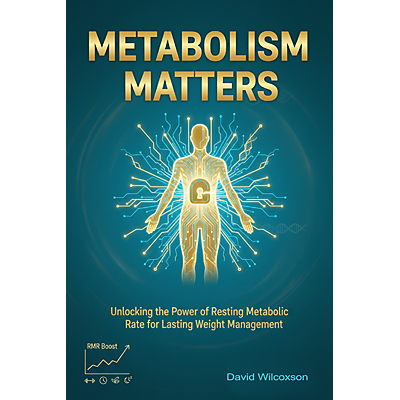
This new book shows you how to use RMR to help clients have long lasting weight management success.
Resting Metabolic Rate is a critical factor for weight management and overall health.
RMR equations can be off by 20-30%.
This new book shows you how to use RMR to help clients have long lasting weight management success.
CLICK HERE TO SEE A TABLE OF CONTENTS.
The relationship between sleep and metabolic rate is mediated by various physiological mechanisms.
One key pathway involves the regulation of hormones that control appetite and metabolism. Sleep deprivation has been shown to increase levels of ghrelin, a hormone that stimulates hunger, while decreasing levels of leptin, a hormone that signals satiety. This hormonal imbalance can lead to increased food intake and a slower metabolic rate, contributing to weight gain.
Additionally, inadequate sleep can impair glucose metabolism and increase cortisol levels, further exacerbating metabolic dysfunction. These findings highlight the importance of addressing sleep quality and duration as part of a comprehensive weight management strategy.
Research has demonstrated that sleep quality and duration significantly influence metabolic rate and overall health.
A study published in the Textbook of Natural Medicine by Dr. Michael T. Murray found that individuals who experienced poor sleep quality had a higher risk of developing metabolic syndrome, a cluster of conditions that increase the risk of heart disease, stroke, and diabetes.
This study underscores the critical role of sleep in maintaining metabolic health and preventing chronic diseases.
Furthermore, the study by Dr. Sara Gottfried in Younger revealed that acute exercise and nature experience could improve sleep quality, thereby enhancing metabolic function and overall well-being.
The impact of sleep on metabolic rate extends beyond hormonal regulation.
Sleep plays a crucial role in the body’s ability to repair and regenerate tissues, including muscle tissue. During deep sleep stages, the body releases growth hormone, which is essential for muscle growth and repair.
Adequate sleep ensures that the body can efficiently repair and build muscle tissue, which in turn supports a higher metabolic rate.
Conversely, poor sleep quality can hinder these reparative processes, leading to muscle loss and a decrease in metabolic rate. This underscores the importance of prioritizing sleep as a fundamental component of any weight management plan.
In addition to its direct effects on metabolic rate, sleep quality and duration also influence lifestyle behaviors that impact weight management.
Poor sleep can lead to increased fatigue and decreased motivation for physical activity, further contributing to a sedentary lifestyle and weight gain. Moreover, sleep deprivation can impair cognitive function and decision-making abilities, making it more challenging to adhere to healthy eating habits.
By improving sleep quality and ensuring adequate sleep duration, individuals can enhance their overall energy levels, cognitive function, and adherence to healthy lifestyle behaviors, thereby supporting sustainable weight management.
The scientific evidence supporting the connection between sleep and metabolic rate is compelling.
A study published in the Textbook of Natural Medicine by Joseph E. Pizzorno and Dr. Michael T. Murray found that individuals who slept less than six hours per night had a significantly higher risk of developing obesity and related metabolic disorders. This study highlights the critical role of sleep in maintaining a healthy weight and metabolic function.
Furthermore, the study by Dr. Robert Lustig in The Hacking of the American Mind revealed that poor sleep quality was associated with reduced central serotonergic responsivity, further emphasizing the importance of sleep in metabolic health.
In conclusion, the impact of sleep quality and duration on metabolic rate is a critical consideration in the pursuit of sustainable weight management.
By understanding the physiological mechanisms linking sleep and metabolism, individuals can make informed decisions to optimize their sleep patterns.
Prioritizing sleep as a fundamental component of a comprehensive weight management strategy can enhance metabolic health, support weight loss goals, and improve overall well-being.
As research continues to elucidate the intricate connections between sleep and metabolic rate, it is essential to integrate these findings into practical, evidence-based recommendations for achieving and maintaining a healthy weight.
 The Microlife BodyGem and MedGem indirect calorimetry devices measure your clients Resting Metabolic Rate, to optimize their weight loss results.
Instead of estimating RMR with the Harris-Benedict or Katch-McArdle formula, the BodyGem and MedGem scientifically measure a clients Metabolic Fingerprint, that is unique to them.
Estimation formulas cannot factor in thyroid issues, the effects of medications, etc.
For the best care, the American Dietetics Association recommends using indirect calorimetry to measure RMR for the most accurate assessment of nutritional needs.
The BodyGem and MedGem are the same type indirect calorimeter. They have the same functionality, accuracy and reliability.
The difference is that the MedGem is a FDA 510K-cleared, class II, medical device, which allows licensed clinicians to make insurance claims on their measurements.
CONTACT US:
Call 720-431-1461 to get your questions answered.
Or complete the CONTACT FORM and we’ll email you or call you.
If you’re ready to order a BodyGem or MedGem System Kit, complete the ORDER FORM and then call us with payment information.
We accept purchase orders from companies that have a net-30 credit account set up with us.
References & Citations
– Murray, Michael T. Textbook of Natural Medicine Fifth Edition.
– Gottfried, Sara. Younger.
– Murray, Michael T. The Longevity Matrix: How to Live Better, Stronger, and Longer.
– Pizzorno, Joseph E. and Michael T. Murray. Textbook of Natural Medicine Volume 2.
– Lustig, Robert. The Hacking of the American Mind: The Science Behind the Corporate Takeover of Our Bodies and Brains.
Source: https://brightlearn.ai