Metabolic rate, the rate at which the body expends energy, is influenced by a myriad of factors, including age, gender, and genetics.
Understanding these influences is crucial for dietitians, bariatric doctors, and personal trainers who aim to help individuals manage their weight effectively.
This section delves into the intricate relationships between these factors and metabolic rate, providing a comprehensive overview backed by scientific research.
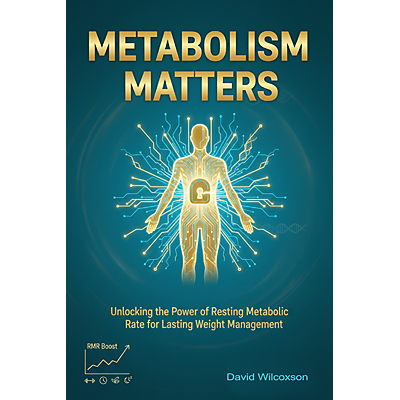
This new book shows you how to use RMR to help clients have long lasting weight management success.
Resting Metabolic Rate is a critical factor for weight management and overall health.
RMR equations can be off by 20-30%.
This new book shows you how to use RMR to help clients have long lasting weight management success.
CLICK HERE TO SEE A TABLE OF CONTENTS.
Age is a significant determinant of metabolic rate.
As individuals age, their metabolic rate tends to decrease due to various physiological changes. One of the primary reasons for this decline is the loss of muscle mass, a condition known as sarcopenia. Sarcopenia progresses at a rate of approximately 0.8% skeletal muscle loss per year from the age of 30 onwards.
This loss of muscle mass directly impacts the resting metabolic rate (RMR), as muscle tissue is metabolically more active than fat tissue. Consequently, older adults often experience a reduction in their RMR, making weight management more challenging. However, it is essential to note that this decline is not inevitable.
Regular exercise, particularly strength training, can mitigate muscle loss and maintain a higher metabolic rate. Studies have shown that exercise remodels promoter methylation in human skeletal muscle, which can help preserve muscle mass and metabolic function.
Gender also plays a pivotal role in determining metabolic rate.
Men generally have a higher metabolic rate than women due to differences in body composition. Men typically have a higher proportion of muscle mass and lower body fat percentage compared to women. These differences in body composition contribute to the higher metabolic rate observed in men.
Additionally, hormonal differences between genders can influence metabolic rate. For instance, women experience hormonal fluctuations throughout their menstrual cycle, which can affect their metabolic rate. During the luteal phase of the menstrual cycle, women may experience a slight increase in their RMR due to the rise in progesterone levels.
Understanding these gender-specific differences is crucial for developing personalized weight management strategies.
Genetics is another critical factor that influences metabolic rate.
Genetic variations can affect how efficiently the body converts food into energy, how it stores fat, and how it responds to different types of exercise.
For example, some individuals may have a genetic predisposition to a higher or lower metabolic rate. Twin studies have shown that genetic factors can account for a significant portion of the variability in metabolic rate among individuals.
However, it is important to emphasize that genetics is not destiny. Lifestyle interventions, such as diet and exercise, can modulate genetic expression and mitigate the impact of genetic predispositions.
For instance, lifestyle interventions have been shown to be effective in preventing type 2 diabetes, even in individuals with a genetic predisposition to the condition.
The interplay between age, gender, and genetics in determining metabolic rate underscores the need for personalized approaches to weight management.
Recognizing that each individual’s metabolic rate is influenced by a unique combination of these factors allows healthcare professionals to tailor interventions more effectively.
For example, older adults may benefit from a combination of strength training and dietary modifications to counteract the age-related decline in metabolic rate.
Similarly, women may need to adjust their dietary and exercise regimens based on their menstrual cycle to optimize their metabolic rate.
Moreover, the impact of these factors on metabolic rate highlights the importance of a holistic approach to health and wellness.
Rather than focusing solely on caloric intake and expenditure, it is crucial to consider the broader context of an individual’s life, including their age, gender, genetic background, and lifestyle.
This holistic approach aligns with the principles of natural medicine, which emphasizes the interconnectedness of various aspects of health and the importance of addressing the root causes of health issues.
In conclusion, age, gender, and genetics are pivotal factors that influence metabolic rate.
Understanding these influences is essential for developing effective, personalized weight management strategies.
By adopting a holistic approach that considers these factors, healthcare professionals can empower individuals to achieve sustainable weight management and overall well-being.
This section has provided an overview of the scientific research on these factors, offering insights that can guide the development of tailored interventions for weight management.
 The Microlife BodyGem and MedGem indirect calorimetry devices measure your clients Resting Metabolic Rate, to optimize their weight loss results.
Instead of estimating RMR with the Harris-Benedict or Katch-McArdle formula, the BodyGem and MedGem scientifically measure a clients Metabolic Fingerprint, that is unique to them.
Estimation formulas cannot factor in thyroid issues, the effects of medications, etc.
For the best care, the American Dietetics Association recommends using indirect calorimetry to measure RMR for the most accurate assessment of nutritional needs.
The BodyGem and MedGem are the same type indirect calorimeter. They have the same functionality, accuracy and reliability.
The difference is that the MedGem is a FDA 510K-cleared, class II, medical device, which allows licensed clinicians to make insurance claims on their measurements.
CONTACT US:
Call 720-431-1461 to get your questions answered.
Or complete the CONTACT FORM and we’ll email you or call you.
If you’re ready to order a BodyGem or MedGem System Kit, complete the ORDER FORM and then call us with payment information.
We accept purchase orders from companies that have a net-30 credit account set up with us.
References & Citations
– Mercola.com. Stops Muscle Wasting Everyone Over 30 Needs.
– Sara Gottfried. Younger.
– Emmanuel C Opara Sam Dagogo Jack. Nutrition and Diabetes.
– Stephen T Sinatra. A Cardiologists Prescription for Optimum Health.
– Mark Sisson. Two Meals a Day The Simple Sustainable Strategy to Lose Fat Reverse Aging.
Source: https://brightlearn.ai